
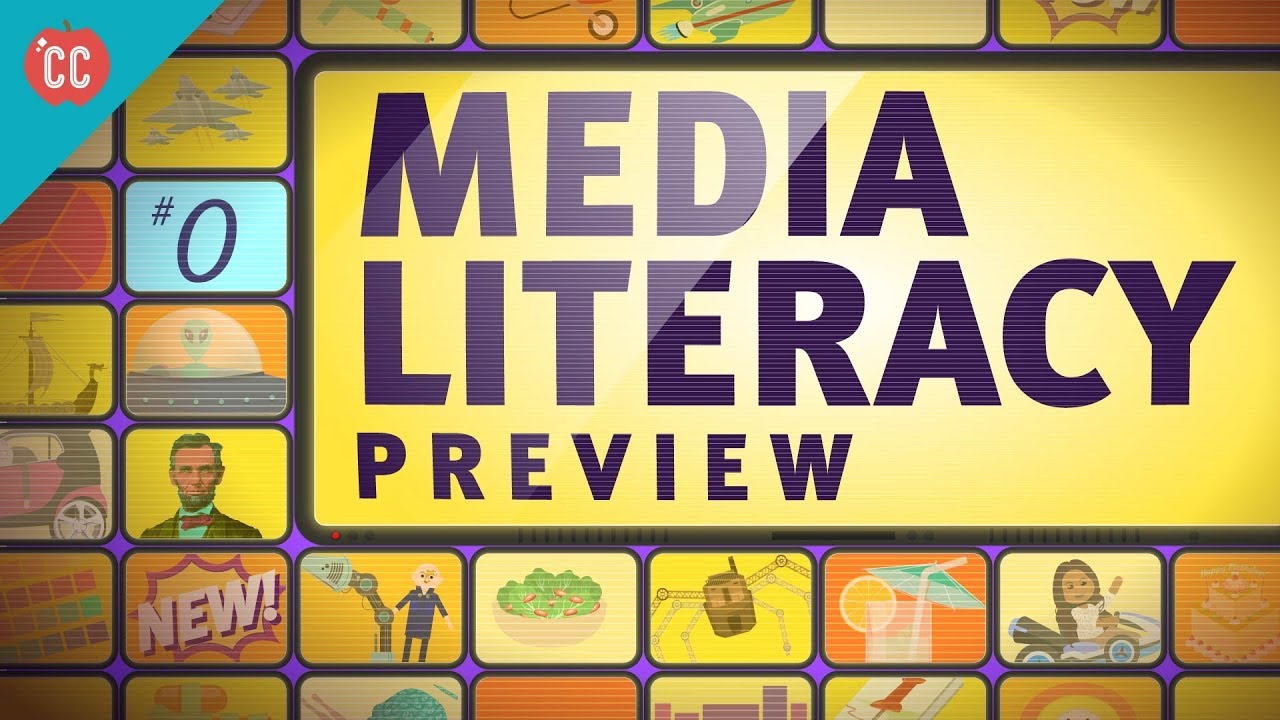
In 12 episodes, Jay Smooth teaches you Media Literacy! Based on an introductory college level curriculum, this series takes you through the history and psychology of media and gives you the skills to become more media savvy. By the end of this course, you’ll be able to: * Describe media literacy as a skill and its development over time * Understand the positive and negative effects of media on audiences * Explain how media regulations and policies affect media producers * Create many forms of media in an informed way
خيارات ترفيهية إضافية خارج MovieBox
نبرز أيضًا وجهات شريكة لعشاق الألعاب الخفيفة والدراما القصيرة. افتح أي تجربة بضغطة واحدة.
قد يعجبك أيضًا
BEST of CoComelon Bath Song + Wheels on the Bus
Signal in catalog
Bengali Kids Cartoon Videos
Signal in catalog
Numbers Songs by StoryBots
Signal in catalog
CoComelon | Netflix Jr
Signal in catalog
Play CoComelon on YouTube!
Signal in catalog
Mix - Every CoComelon Wheels on the Bus Ever!
Signal in catalog
CoComelon Lane! Brand New Netflix Kids Show!
Signal in catalog
Introduction to Artificial Intelligence (AI)
Signal in catalog
Masha and The Bear. Episodes in English
Signal in catalog
Bingo Songs! CoComelon Nursery Rhymes Mix
Signal in catalog
Diana and Roma ABC stories
Signal in catalog
Excel Basics for Data Analysis
Signal in catalog
Zoobees Cartoon Nursery Rhymes for Kids & Videos for Toddlers
Signal in catalog
Nina and JJ! CoComelon Friends
Signal in catalog
Fast Phonics
Signal in catalog
Bebefinn Best Kids Songs and Nursery Rhymes 🎵
Signal in catalog
Animal Friends by CoComelon
Signal in catalog
Sesame Street & Pinkfong Celebrate Earth Day!
Signal in catalog
Basic Learning Songs for Kids
Signal in catalog
Fruits & Vegetables with Sesame Street and Bounce Patrol! 🍎🍇🌽🥕
Signal in catalog
Classic 2D Nursery Rhymes by CoComelon
Signal in catalog
Tricky English Grammar
Signal in catalog
Best Educational Videos for Kids and Toddlers
Signal in catalog
Mix - Bath Songs! CoComelon Nursery Rhymes
Signal in catalog
التعليقات
10 تعليق
We’ve seen and discussed the ways in which the rapid pace of technological change has affected the media literacy landscape, and it’s clear that change isn’t slowing down. How will those changes affect the future of media literacy? How can we make the skills we’ve discussed over this course transferable to future media & technology? *** Resources: On YouTube Kids, Startling Videos Slip Past Filters https://www.nytimes.com/2017/11/04/business/media/youtube-kids-paw-patrol.html?_r=0 Cathy O'Neil on Weapons of Math Destruction http://www.econtalk.org/archives/2016/10/cathy_oneil_on_1.html What happens to your brain when you get a like on Instagram http://www.businessinsider.com/what-happens-to-your-brain-like-instagram-dopamine-2017-3 Eli Pariser: “Beware online ‘filter bubbles’” https://www.ted.com/talks/eli_pariser_beware_online_filter_bubbles *** Crash Course is on Patreon! You can support us directly by signing up at http://www.patreon.com/crashcourse Thanks to the following
We’ve seen and discussed the ways in which the rapid pace of technological change has affected the media literacy landscape, and it’s clear that change isn’t slowing down. How will those changes affect the future of media literacy? How can we make the skills we’ve discussed over this course transferable to future media & technology? *** Resources: On YouTube Kids, Startling Videos Slip Past Filters https://www.nytimes.com/2017/11/04/business/media/youtube-kids-paw-patrol.html?_r=0 Cathy O'Neil on Weapons of Math Destruction http://www.econtalk.org/archives/2016/10/cathy_oneil_on_1.html What happens to your brain when you get a like on Instagram http://www.businessinsider.com/what-happens-to-your-brain-like-instagram-dopamine-2017-3 Eli Pariser: “Beware online ‘filter bubbles’” https://www.ted.com/talks/eli_pariser_beware_online_filter_bubbles *** Crash Course is on Patreon! You can support us directly by signing up at http://www.patreon.com/crashcourse Thanks to the following
We’ve seen and discussed the ways in which the rapid pace of technological change has affected the media literacy landscape, and it’s clear that change isn’t slowing down. How will those changes affect the future of media literacy? How can we make the skills we’ve discussed over this course transferable to future media & technology? *** Resources: On YouTube Kids, Startling Videos Slip Past Filters https://www.nytimes.com/2017/11/04/business/media/youtube-kids-paw-patrol.html?_r=0 Cathy O'Neil on Weapons of Math Destruction http://www.econtalk.org/archives/2016/10/cathy_oneil_on_1.html What happens to your brain when you get a like on Instagram http://www.businessinsider.com/what-happens-to-your-brain-like-instagram-dopamine-2017-3 Eli Pariser: “Beware online ‘filter bubbles’” https://www.ted.com/talks/eli_pariser_beware_online_filter_bubbles *** Crash Course is on Patreon! You can support us directly by signing up at http://www.patreon.com/crashcourse Thanks to the following
We’ve seen and discussed the ways in which the rapid pace of technological change has affected the media literacy landscape, and it’s clear that change isn’t slowing down. How will those changes affect the future of media literacy? How can we make the skills we’ve discussed over this course transferable to future media & technology? *** Resources: On YouTube Kids, Startling Videos Slip Past Filters https://www.nytimes.com/2017/11/04/business/media/youtube-kids-paw-patrol.html?_r=0 Cathy O'Neil on Weapons of Math Destruction http://www.econtalk.org/archives/2016/10/cathy_oneil_on_1.html What happens to your brain when you get a like on Instagram http://www.businessinsider.com/what-happens-to-your-brain-like-instagram-dopamine-2017-3 Eli Pariser: “Beware online ‘filter bubbles’” https://www.ted.com/talks/eli_pariser_beware_online_filter_bubbles *** Crash Course is on Patreon! You can support us directly by signing up at http://www.patreon.com/crashcourse Thanks to the following
Now that you have a solid understanding of the media landscape, it’s time to equip you with the essential skills for navigating it. *** Resources: NAMLE on Media Literacy https://namle.net/publications/media-literacy-definitions/ Digital divide persists even as lower-income Americans make gains in tech adoption http://www.pewresearch.org/fact-tank/2017/03/22/digital-divide-persists-even-as-lower-income-americans-make-gains-in-tech-adoption/ The numbers behind the broadband ‘homework gap’ http://www.pewresearch.org/fact-tank/2015/04/20/the-numbers-behind-the-broadband-homework-gap/ McDonald's: you can sneer, but it's the glue that holds communities together https://www.theguardian.com/business/2016/jun/08/mcdonalds-community-centers-us-physical-social-networks Digital Na(t)ives? Variation in Internet Skills and Uses among Members of the ‘‘Net Generation’’* http://citeseerx.ist.psu.edu/viewdoc/download?doi=10.1.1.462.7343&rep=rep1&type=pdf Stanford researchers find students have
Now that you have a solid understanding of the media landscape, it’s time to equip you with the essential skills for navigating it. *** Resources: NAMLE on Media Literacy https://namle.net/publications/media-literacy-definitions/ Digital divide persists even as lower-income Americans make gains in tech adoption http://www.pewresearch.org/fact-tank/2017/03/22/digital-divide-persists-even-as-lower-income-americans-make-gains-in-tech-adoption/ The numbers behind the broadband ‘homework gap’ http://www.pewresearch.org/fact-tank/2015/04/20/the-numbers-behind-the-broadband-homework-gap/ McDonald's: you can sneer, but it's the glue that holds communities together https://www.theguardian.com/business/2016/jun/08/mcdonalds-community-centers-us-physical-social-networks Digital Na(t)ives? Variation in Internet Skills and Uses among Members of the ‘‘Net Generation’’* http://citeseerx.ist.psu.edu/viewdoc/download?doi=10.1.1.462.7343&rep=rep1&type=pdf Stanford researchers find students have
Now that you have a solid understanding of the media landscape, it’s time to equip you with the essential skills for navigating it. *** Resources: NAMLE on Media Literacy https://namle.net/publications/media-literacy-definitions/ Digital divide persists even as lower-income Americans make gains in tech adoption http://www.pewresearch.org/fact-tank/2017/03/22/digital-divide-persists-even-as-lower-income-americans-make-gains-in-tech-adoption/ The numbers behind the broadband ‘homework gap’ http://www.pewresearch.org/fact-tank/2015/04/20/the-numbers-behind-the-broadband-homework-gap/ McDonald's: you can sneer, but it's the glue that holds communities together https://www.theguardian.com/business/2016/jun/08/mcdonalds-community-centers-us-physical-social-networks Digital Na(t)ives? Variation in Internet Skills and Uses among Members of the ‘‘Net Generation’’* http://citeseerx.ist.psu.edu/viewdoc/download?doi=10.1.1.462.7343&rep=rep1&type=pdf Stanford researchers find students have
Now that you have a solid understanding of the media landscape, it’s time to equip you with the essential skills for navigating it. *** Resources: NAMLE on Media Literacy https://namle.net/publications/media-literacy-definitions/ Digital divide persists even as lower-income Americans make gains in tech adoption http://www.pewresearch.org/fact-tank/2017/03/22/digital-divide-persists-even-as-lower-income-americans-make-gains-in-tech-adoption/ The numbers behind the broadband ‘homework gap’ http://www.pewresearch.org/fact-tank/2015/04/20/the-numbers-behind-the-broadband-homework-gap/ McDonald's: you can sneer, but it's the glue that holds communities together https://www.theguardian.com/business/2016/jun/08/mcdonalds-community-centers-us-physical-social-networks Digital Na(t)ives? Variation in Internet Skills and Uses among Members of the ‘‘Net Generation’’* http://citeseerx.ist.psu.edu/viewdoc/download?doi=10.1.1.462.7343&rep=rep1&type=pdf Stanford researchers find students have
Propaganda! Misinformation! Disinformation! Today we’re talking about the dark – or, shall we say, darkER – side of media. Understanding these media bogeymen is essential to being a more media literate citizen. *** Resources: The Persistent Mystery: How Many Died in 1989? https://www.nytimes.com/1999/06/04/world/the-persistent-mystery-how-many-died-in-1989.html The Media Was Always Bad at Reporting Breaking News, a Brief History https://www.theatlantic.com/national/archive/2013/09/media-was-always-bad-reporting-breaking-news-brief-history/311037/ How To Handle Rumors: http://egap.org/content/brief-31-how-handle-rumors The Macedonian Teens Who Mastered Fake News https://www.wired.com/2017/02/veles-macedonia-fake-news/ We Tracked Down A Fake-News Creator In The Suburbs. Here's What We Learned https://www.npr.org/sections/alltechconsidered/2016/11/23/503146770/npr-finds-the-head-of-a-covert-fake-news-operation-in-the-suburbs Evaluating Information: The Cornerstone of Civic Online
Propaganda! Misinformation! Disinformation! Today we’re talking about the dark – or, shall we say, darkER – side of media. Understanding these media bogeymen is essential to being a more media literate citizen. *** Resources: The Persistent Mystery: How Many Died in 1989? https://www.nytimes.com/1999/06/04/world/the-persistent-mystery-how-many-died-in-1989.html The Media Was Always Bad at Reporting Breaking News, a Brief History https://www.theatlantic.com/national/archive/2013/09/media-was-always-bad-reporting-breaking-news-brief-history/311037/ How To Handle Rumors: http://egap.org/content/brief-31-how-handle-rumors The Macedonian Teens Who Mastered Fake News https://www.wired.com/2017/02/veles-macedonia-fake-news/ We Tracked Down A Fake-News Creator In The Suburbs. Here's What We Learned https://www.npr.org/sections/alltechconsidered/2016/11/23/503146770/npr-finds-the-head-of-a-covert-fake-news-operation-in-the-suburbs Evaluating Information: The Cornerstone of Civic Online