
Harvard business videos.
Des idées divertissement au-delà de MovieBox
Nous mettons aussi en avant des destinations partenaires pour les fans de jeux casual et de mini-dramas. Ouvrez l'une ou l'autre en un clic.
Vous aimerez aussi
SEAS Videos
Signal in catalog
Sesame Street American Sign Language (ASL) Series
Signal in catalog
Learn To Read with Ms Rachel
Signal in catalog
Animal Videos
Signal in catalog
Kids Songs & Nursery Rhymes | CoComelon, Blippi & Little Angel
Signal in catalog
ABC Songs for Kids - CoComelon Nursery Rhymes
Signal in catalog
Learning Quran For Kids MiniMuslims Playlist
Signal in catalog
Bebefinn Best Kids Songs and Nursery Rhymes 🎵
Signal in catalog
Introduction to HTML, CSS, & JavaScript
Signal in catalog
Excel Basics for Data Analysis
Signal in catalog
English Advanced C1
Signal in catalog
Learn To Talk with Ms Rachel
Signal in catalog
CoComelon
Signal in catalog
HTML and CSS in depth
Signal in catalog
Nastya and papa
Signal in catalog
SEAS Graduate Students
Signal in catalog
Data Science Methodology
Signal in catalog
История России 6 класс, под редакцией Торкунова
Signal in catalog
Chinese for HSK 2
Signal in catalog
ABCs, 123s, and MORE with Sesame Street and The Children's Kingdom Nursery Rhymes
Signal in catalog
C++ For C Programmers, Part A
Signal in catalog
Chinese for HSK 1
Signal in catalog
Toddlers & PreK Learning
Signal in catalog
Python for Class 12 (Apni Kaksha)
Signal in catalog
Commentaires
2 commentaires
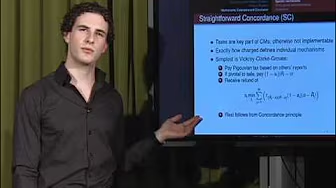
E. Glen Weyl, a junior fellow at the Harvard Society of Fellows, voices-over a slideshow of his joint work with Alexander White, a post-doctoral fellow at the Harvard Economics Department. The paper develops a general model of competition in two-sided markets, such as newspaper or operating systems. The audio slideshow represents an experiment in alternative ways of distributing academic research in economics, funded by Harvard's Milton Fund.
E. Glen Weyl, a junior fellow at the Harvard Society of Fellows, presents his joint work with Scott Duke Kominers, a PhD student in business economics at Harvard's department of Economics and Harvard Business School. The paper discusses a class of alternatives to eminent domain as institutions for assembling land or other disparately owned property subject to holdout problems. The presentation represents an experiment in alternative ways of distributing academic research in economics, funded by Harvard's Milton Fund.