
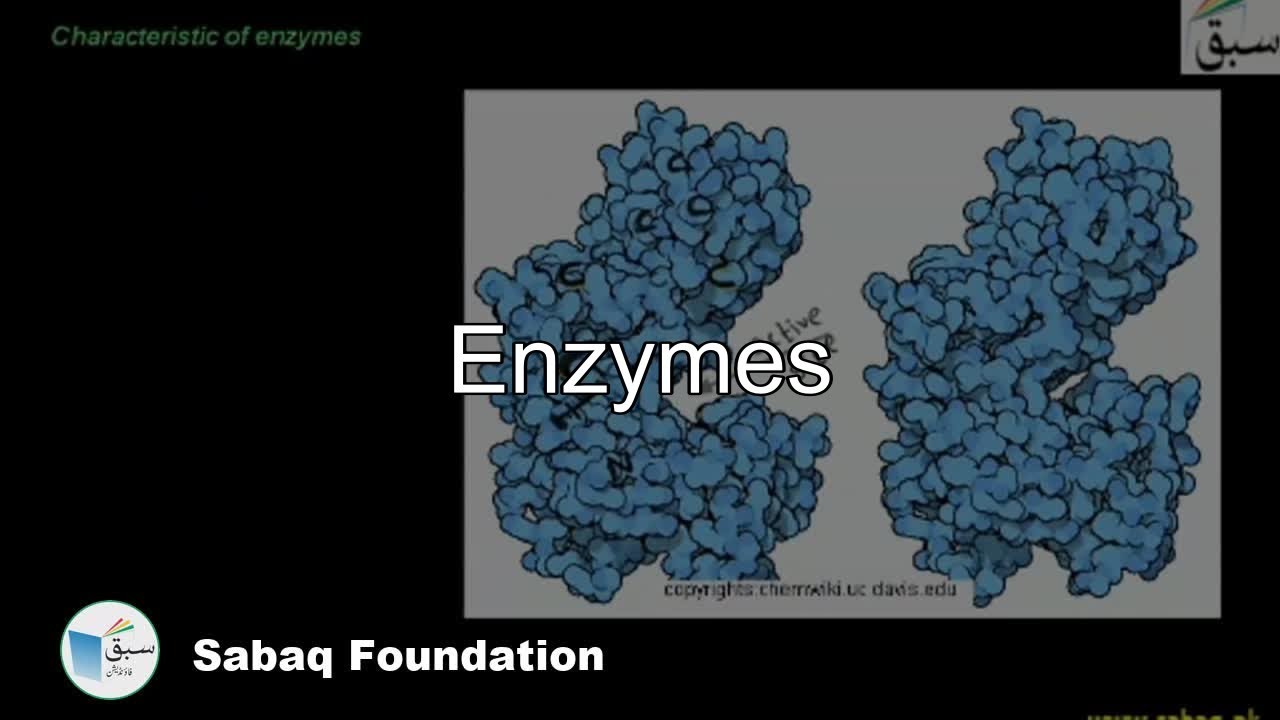
Here’s a playlist of Class 9 Chapter: Enzymes Sabaq.pk’s Lectures which help you get started with your online education. Sabaq.pk offers free video lectures and practice tests for Physics, Chemistry, Biology, Maths, Computer Science, English & more subjects for class k-14. So, subscribe to Sabaq.pk/Sabaq Foundation now and get high marks in your exams. This Sabaq.pk Class 9 Chapter: Enzymes Playlist has the following topics: -Enzyme -Characteristics of Enzymes -Uses of Enzymes -Factors Effecting the rate of Enzyme Action -Lock and Key Model -Induecd Fit Model -Specificity of Enzymes -Enzymes Nature -Types of Cofactors -Factors Effecting the Rate of Enzyme Action -Mechanism of Enzymes -Characteristics of Enzymes -Three Groups of Enzymes -Inhibitors -Feedback Inhibition -Uses of Enzymes ABOUT US: Sabaq.pk or Sabaq Foundation is a non-profit trust providing free online video lectures for students from classes K - 14 for all education boards of Pakistan including FBISE, Punjab Board Sindh Board, KP Board, Baluchistan Board as well as for Cambridge. We have a team of qualified teachers working their best to create easy to understand videos for students providing 14,000 + free lectures for subjects including Physics, Chemistry, Mathematics, Biology, English, General Science, Computer Science, General Math, Statistics and Accounting. Sabaq.pk also provides study material for MCAT and ECAT in the form of video lectures. GET CONNECTED WITH US: • Website: http://sabaq.pk/ • Facebook: https://www.facebook.com/sabaq.pk/ • Twitter: https://twitter.com/sabaqpk • Instagram: https://www.instagram.com/sabaq.pk/ • YouTube: https://www.youtube.com/user/sabaqpk • LinkedIn: https://www.linkedin.com/company/sabaq-foundation/ • Contact #: 051-2356303 (10:00 AM To 6:00 PM)
MovieBox के बाहर भी एंटरटेनमेंट पिक्स
हम casual games और short drama पसंद करने वालों के लिए partner destinations भी दिखाते हैं। किसी भी अनुभव को एक टैप में खोलें।
आपको ये भी पसंद आ सकते हैं
11th Class Biology Chapter 3 - 1st Year Biology Chapter 3 Enzymes - FSc Part 1 Biology Chapter 3
Signal in catalog
First Year Biology Book 1 chapter 12 Nutrition
Signal in catalog
9th Biology New Book Lectures Urdu Medium
Signal in catalog
Class 9 KPK Biology Textbook
Signal in catalog
SSS 1 Biology
Signal in catalog
SSS 3 Biology
Signal in catalog
SS1 Biology
Signal in catalog
SSS 2 Biology
Signal in catalog
SS3 Biology
Signal in catalog
2023 JAMB Biology Past Questions
Signal in catalog
Snakes & Other Fascinating Creatures 🐍✨
Signal in catalog
12th Biology Full Syllabus
Signal in catalog
Bees! | SciShow Kids
Signal in catalog
Learn all about Owls and other amazing animals
Signal in catalog
احياء الثاني متوسط / المنهج الجديد 2026 / كامل
Signal in catalog
Ecology
Signal in catalog
Biologia - Ens. Médio
Signal in catalog
Ecologia Enem 2024
Signal in catalog
Facts about Dolphins and more
Signal in catalog
ВИДЕОУРОКИ: Биология 9 класс
Signal in catalog
Клеточное дыхание | Биология
Signal in catalog
Interesting Facts About Lizards and Other Animals
Signal in catalog
Grade 1 English
Signal in catalog
PrePrimary Urdu
Signal in catalog
टिप्पणियाँ
10 टिप्पणियाँ
In this video, we’ll explore the uses of enzymes across various industries, highlighting their versatility in processes that require breaking down complex compounds. Food Industry: Enzymes like amylase, which breaks down starch into sugars, play a crucial role in the preparation of baked goods. In dough making and bun making, amylase helps to release sugars from flour, which feeds the yeast and improves dough texture and rise. Proteases are also used to modify gluten in dough, creating a softer texture and enhancing overall product quality. Brewing Industry: In yogurt making, lactic acid bacteria play a vital role by fermenting lactose in milk, creating the tangy flavor and thick texture of yogurt. Paper Industry: Enzymes like cellulase and hemicellulase are used to reduce the viscosity of pulp, making it easier to process and handle. Hemicellulase specifically helps to break down hemicellulose, enhancing fiber flexibility and improving paper quality while reducing the need for harsh
In this video, we’ll explore the uses of enzymes across various industries, highlighting their versatility in processes that require breaking down complex compounds. Food Industry: Enzymes like amylase, which breaks down starch into sugars, play a crucial role in the preparation of baked goods. In dough making and bun making, amylase helps to release sugars from flour, which feeds the yeast and improves dough texture and rise. Proteases are also used to modify gluten in dough, creating a softer texture and enhancing overall product quality. Brewing Industry: In yogurt making, lactic acid bacteria play a vital role by fermenting lactose in milk, creating the tangy flavor and thick texture of yogurt. Paper Industry: Enzymes like cellulase and hemicellulase are used to reduce the viscosity of pulp, making it easier to process and handle. Hemicellulase specifically helps to break down hemicellulose, enhancing fiber flexibility and improving paper quality while reducing the need for harsh
In this video, we’ll explore the uses of enzymes across various industries, highlighting their versatility in processes that require breaking down complex compounds. Food Industry: Enzymes like amylase, which breaks down starch into sugars, play a crucial role in the preparation of baked goods. In dough making and bun making, amylase helps to release sugars from flour, which feeds the yeast and improves dough texture and rise. Proteases are also used to modify gluten in dough, creating a softer texture and enhancing overall product quality. Brewing Industry: In yogurt making, lactic acid bacteria play a vital role by fermenting lactose in milk, creating the tangy flavor and thick texture of yogurt. Paper Industry: Enzymes like cellulase and hemicellulase are used to reduce the viscosity of pulp, making it easier to process and handle. Hemicellulase specifically helps to break down hemicellulose, enhancing fiber flexibility and improving paper quality while reducing the need for harsh
In this video, we’ll explore the Feedback Inhibition of Enzyme Action, a key mechanism that regulates enzyme activity in metabolic pathways. In feedback inhibition, the end product of a metabolic pathway acts as an inhibitor for an enzyme involved earlier in the pathway, preventing excessive buildup of that product. How It Works: When a sufficient concentration of the end product accumulates, it binds to an enzyme at an allosteric site (a location other than the active site), forming an enzyme-inhibitor complex. This binding causes a conformational change in the enzyme’s structure, rendering the active site less effective or inactive for binding with its substrate. For example, in the synthesis of the amino acid threonine, aspartate is converted through several enzyme-catalyzed steps. When enough threonine is produced, it acts as a feedback inhibitor, binding to the first enzyme in the pathway and slowing down or stopping further production. Feedback inhibition helps maintain balanc
In this video, we’ll explore the Feedback Inhibition of Enzyme Action, a key mechanism that regulates enzyme activity in metabolic pathways. In feedback inhibition, the end product of a metabolic pathway acts as an inhibitor for an enzyme involved earlier in the pathway, preventing excessive buildup of that product. How It Works: When a sufficient concentration of the end product accumulates, it binds to an enzyme at an allosteric site (a location other than the active site), forming an enzyme-inhibitor complex. This binding causes a conformational change in the enzyme’s structure, rendering the active site less effective or inactive for binding with its substrate. For example, in the synthesis of the amino acid threonine, aspartate is converted through several enzyme-catalyzed steps. When enough threonine is produced, it acts as a feedback inhibitor, binding to the first enzyme in the pathway and slowing down or stopping further production. Feedback inhibition helps maintain balanc
In this video, we’ll explore the Feedback Inhibition of Enzyme Action, a key mechanism that regulates enzyme activity in metabolic pathways. In feedback inhibition, the end product of a metabolic pathway acts as an inhibitor for an enzyme involved earlier in the pathway, preventing excessive buildup of that product. How It Works: When a sufficient concentration of the end product accumulates, it binds to an enzyme at an allosteric site (a location other than the active site), forming an enzyme-inhibitor complex. This binding causes a conformational change in the enzyme’s structure, rendering the active site less effective or inactive for binding with its substrate. For example, in the synthesis of the amino acid threonine, aspartate is converted through several enzyme-catalyzed steps. When enough threonine is produced, it acts as a feedback inhibitor, binding to the first enzyme in the pathway and slowing down or stopping further production. Feedback inhibition helps maintain balanc
In this video, we’ll explore the Feedback Inhibition of Enzyme Action, a key mechanism that regulates enzyme activity in metabolic pathways. In feedback inhibition, the end product of a metabolic pathway acts as an inhibitor for an enzyme involved earlier in the pathway, preventing excessive buildup of that product. How It Works: When a sufficient concentration of the end product accumulates, it binds to an enzyme at an allosteric site (a location other than the active site), forming an enzyme-inhibitor complex. This binding causes a conformational change in the enzyme’s structure, rendering the active site less effective or inactive for binding with its substrate. For example, in the synthesis of the amino acid threonine, aspartate is converted through several enzyme-catalyzed steps. When enough threonine is produced, it acts as a feedback inhibitor, binding to the first enzyme in the pathway and slowing down or stopping further production. Feedback inhibition helps maintain balanc
In this video, we’ll explore Enzyme Inhibitors, focusing on the differences between Reversible and Irreversible Inhibitors and their impact on enzyme function. Reversible Inhibitors: These inhibitors bind to enzymes temporarily, allowing normal enzyme function to resume once the inhibitor is removed. Reversible inhibitors include competitive inhibitors, which bind directly to the active site, competing with the substrate and preventing the formation of the enzyme-substrate complex. Non-competitive inhibitors, on the other hand, bind to a different part of the enzyme, altering its shape and function without directly blocking the active site. Antibiotics often act as reversible inhibitors to slow down bacterial enzymes. Examples of non-competitive inhibitors include nerve gases, cyanide, and certain heavy metals, which bind tightly to enzymes and disrupt critical biochemical pathways. In some cases, these inhibitors disrupt the disulphide bonds within the enzyme, causing irreversible ch
In this video, we’ll explore Enzyme Inhibitors, focusing on the differences between Reversible and Irreversible Inhibitors and their impact on enzyme function. Reversible Inhibitors: These inhibitors bind to enzymes temporarily, allowing normal enzyme function to resume once the inhibitor is removed. Reversible inhibitors include competitive inhibitors, which bind directly to the active site, competing with the substrate and preventing the formation of the enzyme-substrate complex. Non-competitive inhibitors, on the other hand, bind to a different part of the enzyme, altering its shape and function without directly blocking the active site. Antibiotics often act as reversible inhibitors to slow down bacterial enzymes. Examples of non-competitive inhibitors include nerve gases, cyanide, and certain heavy metals, which bind tightly to enzymes and disrupt critical biochemical pathways. In some cases, these inhibitors disrupt the disulphide bonds within the enzyme, causing irreversible ch
In this video, we’ll explore Enzyme Inhibitors, focusing on the differences between Reversible and Irreversible Inhibitors and their impact on enzyme function. Reversible Inhibitors: These inhibitors bind to enzymes temporarily, allowing normal enzyme function to resume once the inhibitor is removed. Reversible inhibitors include competitive inhibitors, which bind directly to the active site, competing with the substrate and preventing the formation of the enzyme-substrate complex. Non-competitive inhibitors, on the other hand, bind to a different part of the enzyme, altering its shape and function without directly blocking the active site. Antibiotics often act as reversible inhibitors to slow down bacterial enzymes. Examples of non-competitive inhibitors include nerve gases, cyanide, and certain heavy metals, which bind tightly to enzymes and disrupt critical biochemical pathways. In some cases, these inhibitors disrupt the disulphide bonds within the enzyme, causing irreversible ch