
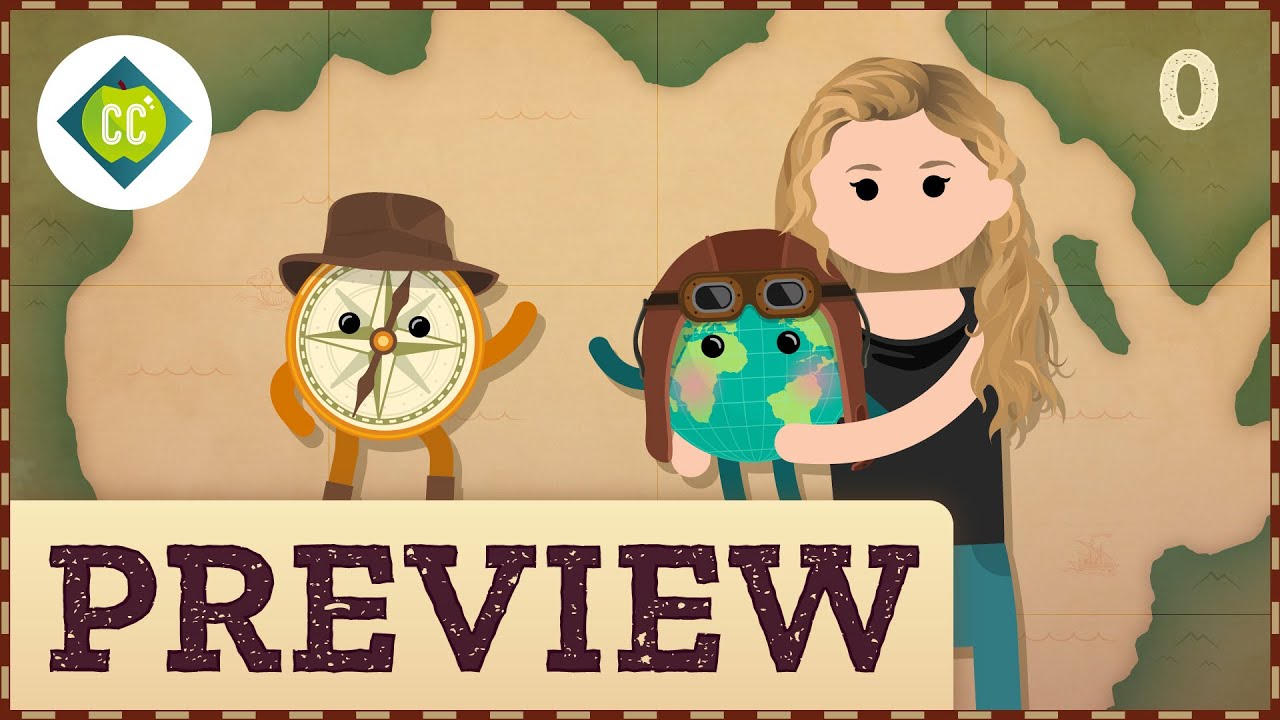
Welcome to Crash Course Geography hosted by Alizé Carrère! This 50-episode course will be split into two parts. In the first half, we will focus on physical geography or the processes and phenomena of the physical world both above and below the Earth's surface. We'll ask questions like, "why is the seafloor so young when the Earth is so old?" or try to identify why winds and ocean currents are so important to life on Earth. Then we'll turn our focus to human geography and explore the ways people occupy the Earth's surface. Like how we've moved, settled, and used the land, resources, and space. Join us as we tell the story of the Earth.
MovieBox के बाहर भी एंटरटेनमेंट पिक्स
हम casual games और short drama पसंद करने वालों के लिए partner destinations भी दिखाते हैं। किसी भी अनुभव को एक टैप में खोलें।
आपको ये भी पसंद आ सकते हैं
3ème - Mécanique
Signal in catalog
Tronc commun sciences: "Equilibre d'un solide soumis á Trois forces"
Signal in catalog
Physique-Chimie 1AC (Mr EL GOUFIFA Jihad)
Signal in catalog
Physique Chimie 3ème : révisions & sujets Brevet
Signal in catalog
KS4 Physics
Signal in catalog
How to nurture your imagination
Signal in catalog
SS 2 Physics
Signal in catalog
ECZ PHYSICS GRADE 12
Signal in catalog
Primary 5 Mathematics
Signal in catalog
SSS12 Biology
Signal in catalog
Kids Health with Akili
Signal in catalog
SSS 1 Biology
Signal in catalog
Are we alone in the universe?
Signal in catalog
Happy Holidays from Netflix Jr!
Signal in catalog
Popular Compilations by CoComelon
Signal in catalog
Animal Fairy Tales: Season 3 (An ebook of 25 stories)
Signal in catalog
Physics
Signal in catalog
Kids Songs by CoComelon
Signal in catalog
CoComelon
Signal in catalog
Alphabet (ABC) Songs by CoComelon
Signal in catalog
SS 3 Physics
Signal in catalog
KS3 Physics
Signal in catalog
Year7 Physics
Signal in catalog
Year9 Physics
Signal in catalog
टिप्पणियाँ
10 टिप्पणियाँ
Welcome to Crash Course Office Hours! Alizé Carrère and April Luginbuhl Mather answer your questions on human and physical geography, including how rocks form, how melting glaciers impact water resources, and what even is geography? Thank you to Flipgrid for sponsoring this series. Check them out here: https://info.flipgrid.com/ 00:00 Introduction 01:48 What is geography? 02:43 Place, space, and location 04:28 Site, situation and scale 09:00 How do different types of rock form? 11:35 Reducing the impacts of earthquakes and volcanoes 13:37 How is a meander formed? 16:34 Origin and formation of fjords 18:52 How can mountain ecosystems be restore from the impact of development and tourism? 22:14 Impact of melting Himalayan glaciers on water resources 26:23 What is posthumanism? 31:30 Who are significant geographers? 34:05 Different types of boundaries 37:36 What are the markers of development? 40:26 What is in a geography course? 45:30 Tips for studying geography 48:35 Why do we person
Welcome to Crash Course Office Hours! Alizé Carrère and April Luginbuhl Mather answer your questions on human and physical geography, including how rocks form, how melting glaciers impact water resources, and what even is geography? Thank you to Flipgrid for sponsoring this series. Check them out here: https://info.flipgrid.com/ 00:00 Introduction 01:48 What is geography? 02:43 Place, space, and location 04:28 Site, situation and scale 09:00 How do different types of rock form? 11:35 Reducing the impacts of earthquakes and volcanoes 13:37 How is a meander formed? 16:34 Origin and formation of fjords 18:52 How can mountain ecosystems be restore from the impact of development and tourism? 22:14 Impact of melting Himalayan glaciers on water resources 26:23 What is posthumanism? 31:30 Who are significant geographers? 34:05 Different types of boundaries 37:36 What are the markers of development? 40:26 What is in a geography course? 45:30 Tips for studying geography 48:35 Why do we person
Welcome to Crash Course Office Hours! Alizé Carrère and April Luginbuhl Mather answer your questions on human and physical geography, including how rocks form, how melting glaciers impact water resources, and what even is geography? Thank you to Flipgrid for sponsoring this series. Check them out here: https://info.flipgrid.com/ 00:00 Introduction 01:48 What is geography? 02:43 Place, space, and location 04:28 Site, situation and scale 09:00 How do different types of rock form? 11:35 Reducing the impacts of earthquakes and volcanoes 13:37 How is a meander formed? 16:34 Origin and formation of fjords 18:52 How can mountain ecosystems be restore from the impact of development and tourism? 22:14 Impact of melting Himalayan glaciers on water resources 26:23 What is posthumanism? 31:30 Who are significant geographers? 34:05 Different types of boundaries 37:36 What are the markers of development? 40:26 What is in a geography course? 45:30 Tips for studying geography 48:35 Why do we person
In our final episode of Crash Course Geography we're going to take a look towards the future, and to do that we'll need to revisit our fundamental geography tools: space, place, and human-environment interactions! We'll talk about the rise of the digital world and virtual spaces, the continued impacts of globalization and the Anthropocene, and even ponder new ideas like geoengineering. As we've said many times in this series the Earth is a beautifully dynamic place, and human innovation and our desire to claim and create our own places will continue to build new landscapes and futures. Thank you all so much for joining us on this journey across our extraordinary home planet! 0:00 - space-time 1:10 - intro 1:17 - virtual spaces 3:15 - place and globalization 4:48 - the slow city movement 5:57 - data landscapes and surveillance 8:51 - human footprint 9:38 - geoengineering 11:10 - series wrap-up 12:26 - outro Sources: https://docs.google.com/document/d/1-x4TxhStow9S-1Oo8vHHstuALghiu9S
In our final episode of Crash Course Geography we're going to take a look towards the future, and to do that we'll need to revisit our fundamental geography tools: space, place, and human-environment interactions! We'll talk about the rise of the digital world and virtual spaces, the continued impacts of globalization and the Anthropocene, and even ponder new ideas like geoengineering. As we've said many times in this series the Earth is a beautifully dynamic place, and human innovation and our desire to claim and create our own places will continue to build new landscapes and futures. Thank you all so much for joining us on this journey across our extraordinary home planet! 0:00 - space-time 1:10 - intro 1:17 - virtual spaces 3:15 - place and globalization 4:48 - the slow city movement 5:57 - data landscapes and surveillance 8:51 - human footprint 9:38 - geoengineering 11:10 - series wrap-up 12:26 - outro Sources: https://docs.google.com/document/d/1-x4TxhStow9S-1Oo8vHHstuALghiu9S
In our final episode of Crash Course Geography we're going to take a look towards the future, and to do that we'll need to revisit our fundamental geography tools: space, place, and human-environment interactions! We'll talk about the rise of the digital world and virtual spaces, the continued impacts of globalization and the Anthropocene, and even ponder new ideas like geoengineering. As we've said many times in this series the Earth is a beautifully dynamic place, and human innovation and our desire to claim and create our own places will continue to build new landscapes and futures. Thank you all so much for joining us on this journey across our extraordinary home planet! 0:00 - space-time 1:10 - intro 1:17 - virtual spaces 3:15 - place and globalization 4:48 - the slow city movement 5:57 - data landscapes and surveillance 8:51 - human footprint 9:38 - geoengineering 11:10 - series wrap-up 12:26 - outro Sources: https://docs.google.com/document/d/1-x4TxhStow9S-1Oo8vHHstuALghiu9S
In our final episode of Crash Course Geography we're going to take a look towards the future, and to do that we'll need to revisit our fundamental geography tools: space, place, and human-environment interactions! We'll talk about the rise of the digital world and virtual spaces, the continued impacts of globalization and the Anthropocene, and even ponder new ideas like geoengineering. As we've said many times in this series the Earth is a beautifully dynamic place, and human innovation and our desire to claim and create our own places will continue to build new landscapes and futures. Thank you all so much for joining us on this journey across our extraordinary home planet! 0:00 - space-time 1:10 - intro 1:17 - virtual spaces 3:15 - place and globalization 4:48 - the slow city movement 5:57 - data landscapes and surveillance 8:51 - human footprint 9:38 - geoengineering 11:10 - series wrap-up 12:26 - outro Sources: https://docs.google.com/document/d/1-x4TxhStow9S-1Oo8vHHstuALghiu9S
From towering skyscrapers covered in trees to zero carbon smart cities, there are so many ways to imagine what a sustainable city of the future might look like. But what does it really mean to be sustainable anyway? Today, we’re going to look at environmental planning and how it intersects with people and the communities they form. Further Reading: Corkscrew Samp Sanctuary - https://corkscrew.audubon.org AJLC at Oberlin - https://www.oberlin.edu/ajlc La Borda Co-Op - http://www.laborda.coop/en/ Sources: https://docs.google.com/document/d/1YQOomMFWqS1JdbnxYpY9VQgoq4r7Gue7x-rdskSshyE/edit?usp=sharing #CrashCourse #Geography #UrbanPlanning Watch our videos and review your learning with the Crash Course App! Download here for Apple Devices: https://apple.co/3d4eyZo Download here for Android Devices: https://bit.ly/2SrDulJ Crash Course is on Patreon! You can support us directly by signing up at http://www.patreon.com/crashcourse Thanks to the following patrons for their generous
From towering skyscrapers covered in trees to zero carbon smart cities, there are so many ways to imagine what a sustainable city of the future might look like. But what does it really mean to be sustainable anyway? Today, we’re going to look at environmental planning and how it intersects with people and the communities they form. Further Reading: Corkscrew Samp Sanctuary - https://corkscrew.audubon.org AJLC at Oberlin - https://www.oberlin.edu/ajlc La Borda Co-Op - http://www.laborda.coop/en/ Sources: https://docs.google.com/document/d/1YQOomMFWqS1JdbnxYpY9VQgoq4r7Gue7x-rdskSshyE/edit?usp=sharing #CrashCourse #Geography #UrbanPlanning Watch our videos and review your learning with the Crash Course App! Download here for Apple Devices: https://apple.co/3d4eyZo Download here for Android Devices: https://bit.ly/2SrDulJ Crash Course is on Patreon! You can support us directly by signing up at http://www.patreon.com/crashcourse Thanks to the following patrons for their generous
From towering skyscrapers covered in trees to zero carbon smart cities, there are so many ways to imagine what a sustainable city of the future might look like. But what does it really mean to be sustainable anyway? Today, we’re going to look at environmental planning and how it intersects with people and the communities they form. Further Reading: Corkscrew Samp Sanctuary - https://corkscrew.audubon.org AJLC at Oberlin - https://www.oberlin.edu/ajlc La Borda Co-Op - http://www.laborda.coop/en/ Sources: https://docs.google.com/document/d/1YQOomMFWqS1JdbnxYpY9VQgoq4r7Gue7x-rdskSshyE/edit?usp=sharing #CrashCourse #Geography #UrbanPlanning Watch our videos and review your learning with the Crash Course App! Download here for Apple Devices: https://apple.co/3d4eyZo Download here for Android Devices: https://bit.ly/2SrDulJ Crash Course is on Patreon! You can support us directly by signing up at http://www.patreon.com/crashcourse Thanks to the following patrons for their generous