
خيارات ترفيهية إضافية خارج MovieBox
نبرز أيضًا وجهات شريكة لعشاق الألعاب الخفيفة والدراما القصيرة. افتح أي تجربة بضغطة واحدة.
قد يعجبك أيضًا
SS 1 Biology
Signal in catalog
The Original CoComelon Alphabet Series
Signal in catalog
Primary 3 Mathematics
Signal in catalog
JS 3 Mathematics
Signal in catalog
SS 2 Physical
Signal in catalog
BabyBus | Super Panda Rescue Team | Cartoon for Kids | Kids Animation
Signal in catalog
SS 2 English
Signal in catalog
Learn English with Movies
Signal in catalog
BEST SONGS for TODDLERS 👶🎵 (1 to 3 year olds)
Signal in catalog
BEST of CoComelon Bath Song + Wheels on the Bus
Signal in catalog
SS 1 Government
Signal in catalog
Learning ABCs - African Alphabet Edutainment
Signal in catalog
Learn With Ms Rachel - Learn To Talk - Baby, Toddler and Preschool Learning
Signal in catalog
Learn Christmas English with TV Series and Movies
Signal in catalog
Year4 Maths
Signal in catalog
Learn English with Music
Signal in catalog
Learn To Talk with Ms Rachel
Signal in catalog
Presentations: Speaking so that People Listen
Signal in catalog
KS1 Religious Education
Signal in catalog
KS1 English
Signal in catalog
Learn English with PODCASTS
Signal in catalog
Learn To Read with Ms Rachel
Signal in catalog
JSS9 Science
Signal in catalog
Preschool Videos with Ms Rachel
Signal in catalog
التعليقات
10 تعليق
Slave labor was used to build some of the oldest buildings at Harvard, including Massachusetts Hall and Harvard Hall. In her paper Avery Williamson considers ways that the work of these slaves could be commemorated in the Yard.
Harvard's race science legacy is hidden in the depths of Harvard institutions like the Peabody Museum. But in their day the racists ideas of Harvard faculty members like Ernest Albert Hooton circulated in the real world and influenced students, colleagues, and influential Americans. Zoe Weinberg asks Harvard to confront its race science legacy.
Brandi Waters uncovers the "in between" spaces in Warren House. These hidden spaces were likely used to house travelers who moved through Cambridge on the Underground Railroad.
Shelly Thomas suggests that "Erecting a memorial at Wadsworth House and including slaves like Venus, Titus, and Juba in the commentary on the building will be a sign of respect for all of the men and women who were forced into slavery and for all of the individuals who would die never having known freedom."
Elmwood has emerged as a powerful symbol of Harvard's long history and today provides shelter to Harvard's presidents. It was built in 1767 by Harvard graduate and Antiguan plantation owner Thomas Oliver, and every owner of the home has been affiliated with Harvard as an alumnus, professor, spouse, or dean. Kaitlin Terry writes that "Recognizing Elmwood as standing at the intersection of Harvard and slavery fundamentally changes the way we understand it as both a resource and a symbol for Harvard University."
Alexandra Rahman discusses the donations the Edwin Atkins family made to Harvard. These donations included monetary gifts and plantation land in Cuba. In the 20th century Harvard Professor Oakes Ames studied orchids on the plantation and considered the troubled past of the plantation. Alexandra's paper was called: "'A very plain business man': Edwin Farnsworth Atkins and the Birth of the Harvard Botanical Station on the Former Slave Plantation Soledad."
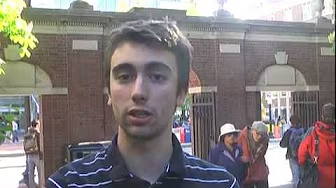
Gary Pelissier discusses how the Royall family fortune, which was created by slave labor, came to fund Harvard University Law School. This interview was shot in the Caspersen Room of the Law School library.
A financial crisis in the early nineteenth century led the president of the College to solicit gifts from the burgeoning merchant elite in Boston. Robert Mann discusses the donations the Perkins family made to Harvard in the mid-nineteenth century. When James Perkins died in 1822 he left $20,000 to Harvard and funded a chair in mathematics which still exists to this day. This gift also helped fund the Harvard Observatory.
In 1838 the Philanthropic Society of Harvard's Divinity School organized a debate on the topic of abolition. Learah Lockhart tells how Josiah Quincy interfered in the debate and prevented "strangers" from outside of Harvard from attending.
In 1775 two slaves, Mark and Phillis, were executed at the Gallows Lot in Cambridge for poisoning their master, Captain John Codman of Charlestown. Both Phillis and Mark were tried and convicted of the crime of "petit treason." Mark was hanged; and Phillis was burned at the stake. Jim Henle tells what connections these executions had to Harvard.