
Title Matrix
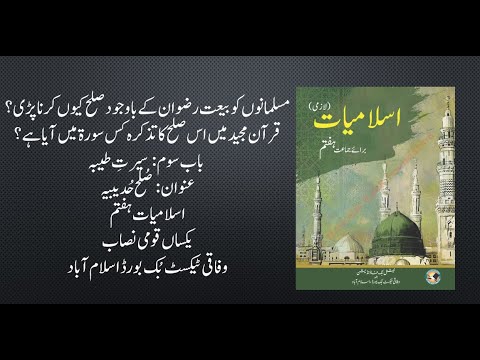
ISLAMIYAT CLASS 7TH NEW BOOK SNC FEDERAL TEXT BOOK BOARD ISLAMABAD
The "Sulah Hudaibiya," also known as the Treaty of Hudaibiya, is a significant event in Islamic history. It took place in the year 628 CE, during the time of Prophet Muhammad. The treaty was a peace agreement between the Muslims of Medina, led by Prophet Muhammad, and the Quraysh tribe of Mecca, who had previously opposed the Muslims. The main terms of the Treaty of Hudaibiya included a ceasefire between the two parties for ten years, during which there would be no hostilities or warfare. It also allowed for peaceful interactions and trade between the two cities. One of the notable aspects of this treaty was that it marked a turning point for the Muslim community, as they were able to establish peaceful relations with their former adversaries in Mecca. Although it appeared that the terms of the treaty were disadvantageous to the Muslims at the time, it ultimately led to a period of stability and allowed Islam to spread peacefully. Moreover, it served as a demonstration of Prophet Muhammad's commitment to peaceful resolution and diplomacy when possible, even in the face of adversity. The Treaty of Hudaibiya is often cited as an example of the wisdom and foresight of Prophet Muhammad in achieving long-term goals for the Muslim community, and it played a pivotal role in the eventual conquest of Mecca by the Muslims in 630 CE
MovieBox के बाहर भी एंटरटेनमेंट पिक्स
हम casual games और short drama पसंद करने वालों के लिए partner destinations भी दिखाते हैं। किसी भी अनुभव को एक टैप में खोलें।
आपको ये भी पसंद आ सकते हैं
Hamza AI Cartoon Series - 2025
Signal in catalog
Kaneez Fatima Cartoon Series S.1
Signal in catalog
Ghulam Rasool Cartoon
Signal in catalog
Kaneez Fatima Se Batein
Signal in catalog
7th Islamiyat New Book
Signal in catalog
6th Islamiat New Book
Signal in catalog
Grade 3 English
Signal in catalog
Grade 4 English
Signal in catalog
One 4 Kids Movies
Signal in catalog
10Th Class Islamiat Chapter 6 | Hazrat Imam Zaid Bin Ali R A | Islamiat Class 10 Chapter 6 | SNC 2024
Signal in catalog
Islamiat Class 7 snc
Signal in catalog
9th Class Islamiat Chapter 2 Unit B (الجز الثانی )
Signal in catalog
10Th Class Islamiat book | Chapter 4 Ikhlaq-o-Adab | Islamiat Class 10 Chapter 4 | PTTB
Signal in catalog
Ramzan Special Video 2021
Signal in catalog
SS 1 Chemistry
Signal in catalog
CocoMelon | Little Baby Bum | Blippi - Nursery Rhymes & Kids TV Shows
Signal in catalog
SS 3 Biology
Signal in catalog
Class 9 Islamiyat Sindh Board
Signal in catalog
Class 6 Islamiat Chapter 3 - Nabi SAW or Madni Muashray ka Qiayam - 6 Class Islamiat Chapter 3
Signal in catalog
Class 8 islamiat Chapter 6 Exercise - Umhaat Al Momineen R.A - 8th Class islamiat Chapter 6
Signal in catalog
Class 6 islamiat Book Chapter 4 | Mashavart ki Ahmiyat | New Book Islamiat Class 6th - Unit 4
Signal in catalog
Kids Naat & Kalam - Kids Madani Channel
Signal in catalog
Kids vs Shaitan
Signal in catalog
Bakra Eid 2020
Signal in catalog
टिप्पणियाँ
10 टिप्पणियाँ
The Importance of Knowledge in Islam. Learn why knowledge (Ilm) holds a special place in Islam. Discover how the Qur'an and the teachings of Prophet Muhammad ﷺ encourage every Muslim to seek beneficial knowledge and use it for the betterment of society. Islam gives great importance to knowledge (Ilm). The first revelation to Prophet Muhammad ﷺ began with the word "Read" (Iqra), showing that learning is the foundation of faith and progress. The Prophet ﷺ said, "Seeking knowledge is an obligation upon every Muslim." Knowledge helps us understand the Qur'an, strengthen our faith, make wise decisions, and serve humanity. In Islam, both religious and beneficial worldly knowledge are highly valued when used for good. A knowledgeable person is honored by Allah and becomes a source of guidance for others. Therefore, every Muslim should strive to learn, teach, and act upon beneficial knowledge throughout life. Knowledge helps us understand the Qur'an, strengthen our faith, make better decisi
The Importance of Knowledge in Islam. Learn why knowledge (Ilm) holds a special place in Islam. Discover how the Qur'an and the teachings of Prophet Muhammad ﷺ encourage every Muslim to seek beneficial knowledge and use it for the betterment of society. Islam gives great importance to knowledge (Ilm). The first revelation to Prophet Muhammad ﷺ began with the word "Read" (Iqra), showing that learning is the foundation of faith and progress. The Prophet ﷺ said, "Seeking knowledge is an obligation upon every Muslim." Knowledge helps us understand the Qur'an, strengthen our faith, make wise decisions, and serve humanity. In Islam, both religious and beneficial worldly knowledge are highly valued when used for good. A knowledgeable person is honored by Allah and becomes a source of guidance for others. Therefore, every Muslim should strive to learn, teach, and act upon beneficial knowledge throughout life. Knowledge helps us understand the Qur'an, strengthen our faith, make better decisi
Sufiya-e-Kiram (The Noble Sufi Saints) Sufiya-e-Kiram (رحمهم الله) were great Muslim scholars and saints who dedicated their lives to worshipping Allah, following the Sunnah of Prophet Muhammad ﷺ, and serving humanity. They emphasized sincerity, humility, patience, love, and remembrance of Allah (Dhikr). Through their noble character and teachings, they inspired millions to strengthen their faith and develop good morals. Famous Sufi saints include Hazrat Abdul Qadir Jilani (رحمه الله), Hazrat Khwaja Moinuddin Chishti (رحمه الله), and Hazrat Baba Farid Ganj Shakar (رحمه الله). Hazrat Baha u deen naqash band BuKari ( حمه الله ) , Hazrat shahab u deen suhar wardy ( حمه الله ). Their legacy reminds us that true success lies in obedience to Allah, kindness to others, and purity of the heart. Thank you For watching Elm Ki Dunia
Sufiya-e-Kiram (The Noble Sufi Saints) Sufiya-e-Kiram (رحمهم الله) were great Muslim scholars and saints who dedicated their lives to worshipping Allah, following the Sunnah of Prophet Muhammad ﷺ, and serving humanity. They emphasized sincerity, humility, patience, love, and remembrance of Allah (Dhikr). Through their noble character and teachings, they inspired millions to strengthen their faith and develop good morals. Famous Sufi saints include Hazrat Abdul Qadir Jilani (رحمه الله), Hazrat Khwaja Moinuddin Chishti (رحمه الله), and Hazrat Baba Farid Ganj Shakar (رحمه الله). Hazrat Baha u deen naqash band BuKari ( حمه الله ) , Hazrat shahab u deen suhar wardy ( حمه الله ). Their legacy reminds us that true success lies in obedience to Allah, kindness to others, and purity of the heart. Thank you For watching Elm Ki Dunia
Short Note on Zainab bint Ali (R.A.) Zainab bint Ali (R.A.) was the noble daughter of Hazrat Ali ibn Abi Talib (R.A.) and Hazrat Fatimah (R.A.), the beloved daughter of Prophet Muhammad ﷺ. She was also the granddaughter of the Prophet ﷺ and is remembered for her wisdom, patience, courage, and unwavering faith. Zainab (R.A.) played a significant role after the Battle of Karbala. Following the martyrdom of her brother, Hazrat Hussain (R.A.), she showed extraordinary strength by protecting the surviving members of the Prophet's family and speaking courageously in the courts of Kufa and Damascus. Her powerful words defended the truth and preserved the message of Karbala. She is an inspiring example of resilience, dignity, and devotion to Islam. Muslims around the world honor her for her patience in the face of hardship and her commitment to justice. Key Lessons: Stay firm on truth and justice. Show patience during trials. Have courage to speak against oppression. Trust in Allah in eve
Short Note on Zainab bint Ali (R.A.) Zainab bint Ali (R.A.) was the noble daughter of Hazrat Ali ibn Abi Talib (R.A.) and Hazrat Fatimah (R.A.), the beloved daughter of Prophet Muhammad ﷺ. She was also the granddaughter of the Prophet ﷺ and is remembered for her wisdom, patience, courage, and unwavering faith. Zainab (R.A.) played a significant role after the Battle of Karbala. Following the martyrdom of her brother, Hazrat Hussain (R.A.), she showed extraordinary strength by protecting the surviving members of the Prophet's family and speaking courageously in the courts of Kufa and Damascus. Her powerful words defended the truth and preserved the message of Karbala. She is an inspiring example of resilience, dignity, and devotion to Islam. Muslims around the world honor her for her patience in the face of hardship and her commitment to justice. Key Lessons: Stay firm on truth and justice. Show patience during trials. Have courage to speak against oppression. Trust in Allah in eve
Awlad-e-Mubaraka of Hazrat muhamad p.b.u.h. Hazrat Hasan (R.A.) Hazrat Hasan ibn Ali (R.A.), the beloved grandson of Prophet Muhammad ﷺ and the elder son of Hazrat Ali (R.A.) and Hazrat Fatimah (R.A.), was blessed with many children. Historical sources differ on the exact number, but many classical scholars report that he had several sons and daughters, with some narrations mentioning 15 sons and 9 daughters. Among his most well-known children were Zayd ibn Hasan (R.A.), Hasan al-Muthanna (R.A.), Qasim ibn Hasan (R.A.), Abdullah ibn Hasan (R.A.), and Talha ibn Hasan (R.A.). Qasim (R.A.) and Abdullah (R.A.) are especially remembered for their bravery and sacrifice during the tragic events of Karbala, where they stood alongside their uncle, Hazrat Hussain (R.A.). The descendants of Hazrat Hasan (R.A.) are known as the Hasanids, and they have played an important role in preserving the noble lineage of the Prophet Muhammad ﷺ throughout Islamic history. His family remains a symbol of fa
Awlad-e-Mubaraka of Hazrat muhamad p.b.u.h. Hazrat Hasan (R.A.) Hazrat Hasan ibn Ali (R.A.), the beloved grandson of Prophet Muhammad ﷺ and the elder son of Hazrat Ali (R.A.) and Hazrat Fatimah (R.A.), was blessed with many children. Historical sources differ on the exact number, but many classical scholars report that he had several sons and daughters, with some narrations mentioning 15 sons and 9 daughters. Among his most well-known children were Zayd ibn Hasan (R.A.), Hasan al-Muthanna (R.A.), Qasim ibn Hasan (R.A.), Abdullah ibn Hasan (R.A.), and Talha ibn Hasan (R.A.). Qasim (R.A.) and Abdullah (R.A.) are especially remembered for their bravery and sacrifice during the tragic events of Karbala, where they stood alongside their uncle, Hazrat Hussain (R.A.). The descendants of Hazrat Hasan (R.A.) are known as the Hasanids, and they have played an important role in preserving the noble lineage of the Prophet Muhammad ﷺ throughout Islamic history. His family remains a symbol of fa
Sahaba-e-Kiram (R.A.) Sahaba-e-Kiram (R.A.) were the blessed companions of Prophet Muhammad ﷺ who believed in him, met him during his lifetime, and remained faithful to Islam until their death. They were the first generation of Muslims and played a vital role in spreading the message of Islam across the world. The Sahaba (R.A.) sacrificed their wealth, families, and even their lives for the sake of Allah. Their honesty, courage, patience, and devotion to the Qur'an and Sunnah made them outstanding role models for every Muslim. Through their efforts, the teachings of Islam were preserved and passed on to future generations. Their lives teach us the values of faith, unity, sincerity, sacrifice, and obedience to Allah and His Messenger ﷺ. Every Muslim should respect, love, and learn from the noble example of the Sahaba-e-Kiram (R.A.). "May Allah be pleased with all the Sahaba-e-Kiram (R.A.). Ameen." Thank you For Watching Elm Ki dunia
Sahaba-e-Kiram (R.A.) Sahaba-e-Kiram (R.A.) were the blessed companions of Prophet Muhammad ﷺ who believed in him, met him during his lifetime, and remained faithful to Islam until their death. They were the first generation of Muslims and played a vital role in spreading the message of Islam across the world. The Sahaba (R.A.) sacrificed their wealth, families, and even their lives for the sake of Allah. Their honesty, courage, patience, and devotion to the Qur'an and Sunnah made them outstanding role models for every Muslim. Through their efforts, the teachings of Islam were preserved and passed on to future generations. Their lives teach us the values of faith, unity, sincerity, sacrifice, and obedience to Allah and His Messenger ﷺ. Every Muslim should respect, love, and learn from the noble example of the Sahaba-e-Kiram (R.A.). "May Allah be pleased with all the Sahaba-e-Kiram (R.A.). Ameen." Thank you For Watching Elm Ki dunia