
Harvard business videos.
MovieBox سے آگے بھی entertainment picks
ہم casual games اور short drama پسند کرنے والوں کے لیے partner destinations بھی دکھاتے ہیں۔ کسی بھی تجربے کو ایک ٹیپ میں کھولیں۔
آپ کو یہ بھی پسند آ سکتا ہے
5 EASIEST Ways to Make Money With AI (No One is Doing This)
Signal in catalog
SEAS Videos
Signal in catalog
Introduction to HTML, CSS, & JavaScript
Signal in catalog
Kids Songs & Nursery Rhymes | CoComelon, Blippi & Little Angel
Signal in catalog
Get started learning Japanese!
Signal in catalog
كراسة اللغه الفرنسيه المستوى الاول المدرسة الرائدة
Signal in catalog
The Only Price Action Trading Video You Will Ever Need
Signal in catalog
English Advanced C1
Signal in catalog
CoComelon
Signal in catalog
Chinese for HSK 2
Signal in catalog
Nastya and papa
Signal in catalog
Chinese for HSK 1
Signal in catalog
ABC Songs for Kids - CoComelon Nursery Rhymes
Signal in catalog
Kaneez Fatima Se Batein
Signal in catalog
SEAS Graduate Students
Signal in catalog
Grade 1 | First Quarter | Week 2
Signal in catalog
Learning Quran For Kids MiniMuslims Playlist
Signal in catalog
Bebefinn Best Kids Songs and Nursery Rhymes 🎵
Signal in catalog
Excel Basics for Data Analysis
Signal in catalog
Data Science Methodology
Signal in catalog
Vlad and Niki learn cooking
Signal in catalog
SS 3 Physical
Signal in catalog
C++ For C Programmers, Part A
Signal in catalog
Careers in business, marketing and finance
Signal in catalog
تبصرے
2 تبصرے
E. Glen Weyl, a junior fellow at the Harvard Society of Fellows, voices-over a slideshow of his joint work with Alexander White, a post-doctoral fellow at the Harvard Economics Department. The paper develops a general model of competition in two-sided markets, such as newspaper or operating systems. The audio slideshow represents an experiment in alternative ways of distributing academic research in economics, funded by Harvard's Milton Fund.
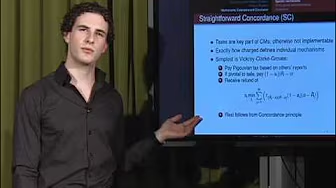
E. Glen Weyl, a junior fellow at the Harvard Society of Fellows, presents his joint work with Scott Duke Kominers, a PhD student in business economics at Harvard's department of Economics and Harvard Business School. The paper discusses a class of alternatives to eminent domain as institutions for assembling land or other disparately owned property subject to holdout problems. The presentation represents an experiment in alternative ways of distributing academic research in economics, funded by Harvard's Milton Fund.