
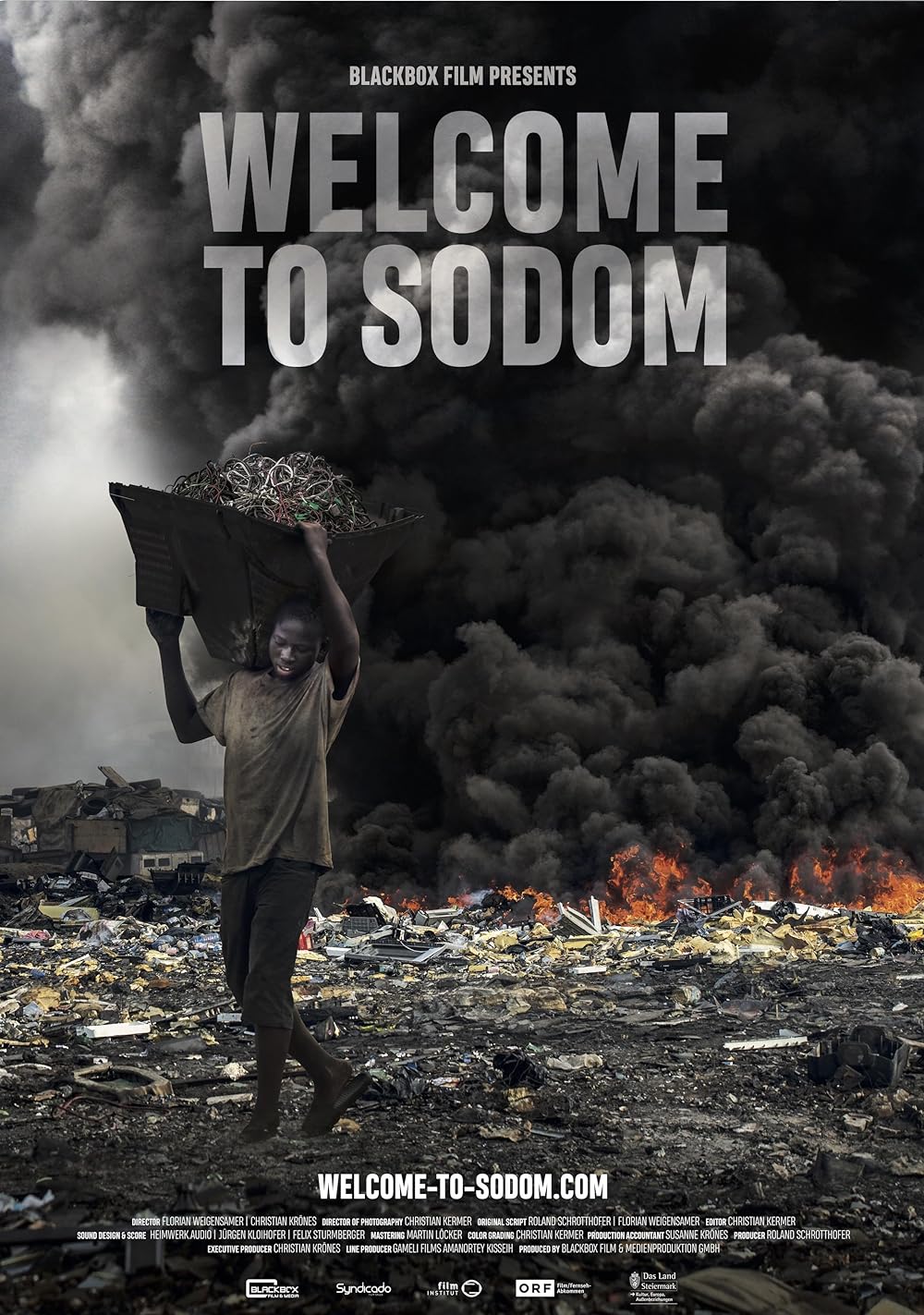
Hundreds of thousands of mobile phones, LCD TVs, notebooks and the likes become useless and "out" relatively soon and end up in Ghana where children and adolescents dismantle them in toxic smoke. A "clean" business for some, a poi...
Bande-annonce
Casting
Mohammed Abubakar
Self
Awal Mohammed
Self
Kwasi Yefter
Self
Vous aimerez aussi
Welcome to Sodom
Signal in catalog
The Ivory Game
Signal in catalog
Sous-sols
Signal in catalog
Maria e o Cangaço
Signal in catalog
Sex Next Door
Signal in catalog
Kingdom
Signal in catalog
Sex Sells
Signal in catalog
Slay Queens
Signal in catalog
État critique: Entre la vie et la mort
Signal in catalog
Serengeti
Signal in catalog
MH370: L'avion disparu
Signal in catalog
Nos océans
Signal in catalog
Trust Me: The False Prophet
Signal in catalog
Secrets of Penthouse
Signal in catalog
Enlèvement extraterrestre à Manhattan
Signal in catalog
Underworld, Inc.
Signal in catalog
L'aventure sauvage
Signal in catalog
I, Hostage
Signal in catalog
FC Barcelona: A New Era
Signal in catalog
The UnXplained
Signal in catalog
Walking with Dinosaurs
Signal in catalog
Twisted Love: Amour toxique
Signal in catalog
Behind Bars: The World's Toughest Prisons
Signal in catalog
Une planète, sept mondes sauvages
Signal in catalog
Commentaires
5 commentaires
Bumped into this documentary by chance, just changing channels on my TV one night. First scene i saw has nailed my attention to it. I couldn't believe what i saw. I've seen docs about garbage cities in India and people who live there, as shocking as this one but the fact that technological garbage from the whole world comes to a place in Africa caught me unprepared. So, it is not easy to watch this but at the same time it is filmed and narrated so well, it actually "takes you there" and instantly I felt the intimacy with the protagonists as they talk about their dreams and wishes, so humble and nice people looking for a better life , but living in that hell...yet it is in the heart of the most beautiful nature of Africa. The way the camera works is perfect. This movie is such a gem in so many ways, and I really hope, some of the protagonists will have at least some benefit from it too.
I recall watching this documentary a long time ago. The quality of the production was excellent, and I found it to be a very powerful presentation of a deeply disturbing matter, one which I accepted without question. Now much older, and a little wiser, when I once again came across this documentary, I was curious to see what the reviews might be like on IMDb. When reading them, I took note of a passing comment that some "say it's staged and propangda (sic) or nonsense", but that in essence this not the case. As many of us are well aware, we live in an era where it is becoming increasingly commonplace for truth to be warped in order to advance specific agendas, be it the dangers of Global Warming or COVID 19. It is thus, inadvisable to accept without question any of the claims made in documentaries such as these. With this in mind, I set out to determine the credibility of "Welcome to Sodom". And it did not take long to locate a paper, by Martin Oteng-Ababio of the University of Ghana, criticizing the nature of such documentaries. As I had suspected, might be the case, this documentary is not entirely accurate, and although well meaning, it is nonetheless guilty of sacrificing truth in favor of dramatization. If you are interested in reading this well-referenced paper, it can be located by searching for "Dispelling common misconceptions to improve policy outlook in developing countries." It is not a long read, consisting of only 15 pages, of which 12 contain the content, with the final 3 being a list of references. The meat of the matter, if you will, begins on page 5 where the myths surrounding Agbobgloshie are discussed and refuted. "Lies will always cost more than telling the truth, no matter how much we may suffer for doing so."
Bumped into this documentary by chance, just changing channels on my TV one night. First scene i saw has nailed my attention to it. I couldn't believe what i saw. I've seen docs about garbage cities in India and people who live there, as shocking as this one but the fact that technological garbage from the whole world comes to a place in Africa caught me unprepared. So, it is not easy to watch this but at the same time it is filmed and narrated so well, it actually "takes you there" and instantly I felt the intimacy with the protagonists as they talk about their dreams and wishes, so humble and nice people looking for a better life , but living in that hell...yet it is in the heart of the most beautiful nature of Africa. The way the camera works is perfect. This movie is such a gem in so many ways, and I really hope, some of the protagonists will have at least some benefit from it too.
I recall watching this documentary a long time ago. The quality of the production was excellent, and I found it to be a very powerful presentation of a deeply disturbing matter, one which I accepted without question. Now much older, and a little wiser, when I once again came across this documentary, I was curious to see what the reviews might be like on IMDb. When reading them, I took note of a passing comment that some "say it's staged and propangda (sic) or nonsense", but that in essence this not the case. As many of us are well aware, we live in an era where it is becoming increasingly commonplace for truth to be warped in order to advance specific agendas, be it the dangers of Global Warming or COVID 19. It is thus, inadvisable to accept without question any of the claims made in documentaries such as these. With this in mind, I set out to determine the credibility of "Welcome to Sodom". And it did not take long to locate a paper, by Martin Oteng-Ababio of the University of Ghana, criticizing the nature of such documentaries. As I had suspected, might be the case, this documentary is not entirely accurate, and although well meaning, it is nonetheless guilty of sacrificing truth in favor of dramatization. If you are interested in reading this well-referenced paper, it can be located by searching for "Dispelling common misconceptions to improve policy outlook in developing countries." It is not a long read, consisting of only 15 pages, of which 12 contain the content, with the final 3 being a list of references. The meat of the matter, if you will, begins on page 5 where the myths surrounding Agbobgloshie are discussed and refuted. "Lies will always cost more than telling the truth, no matter how much we may suffer for doing so."