
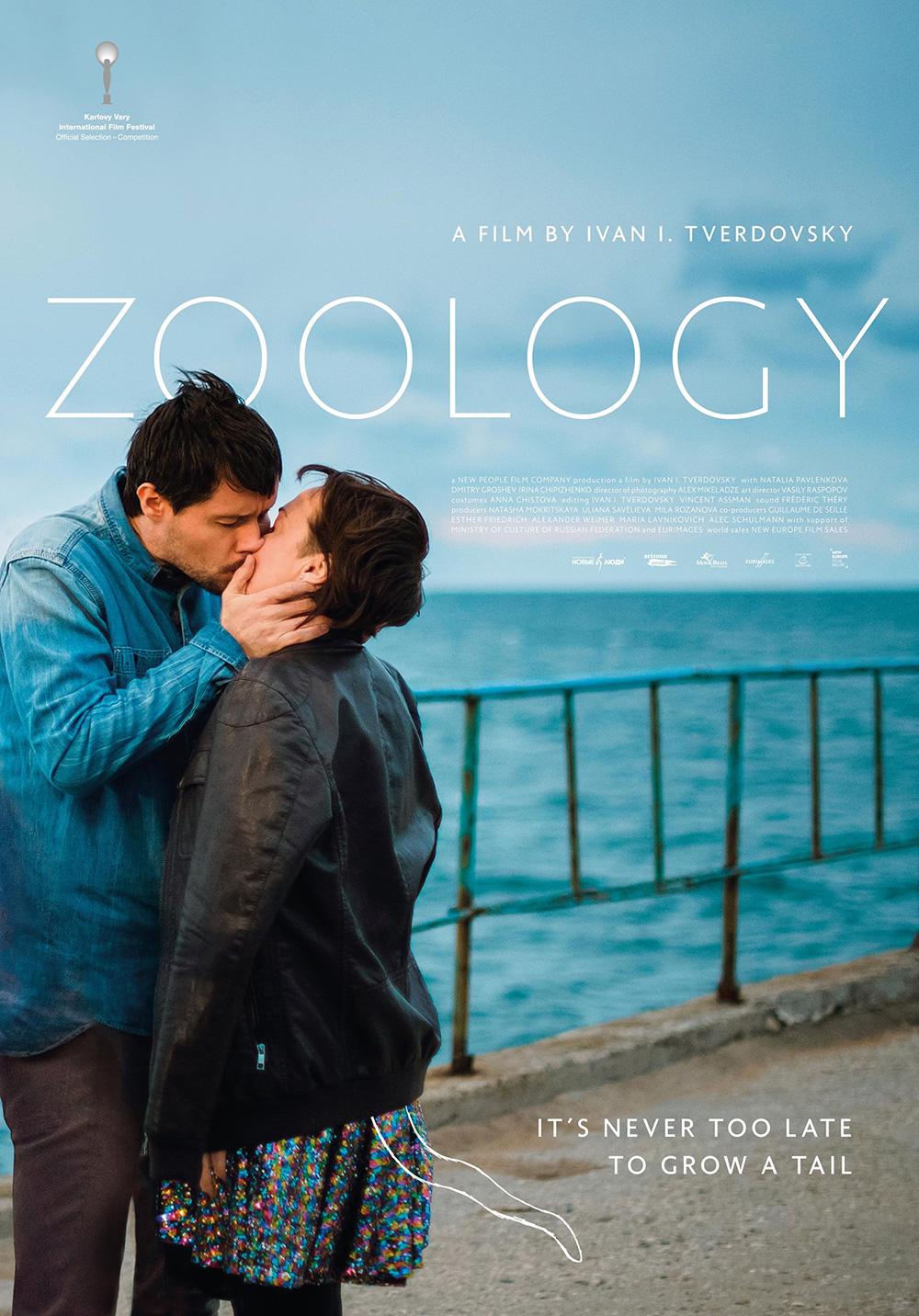
Middle-aged zoo worker Natasha still lives with her mother in a small coastal town. She is stuck and it seems that life has no surprises for her until one day - she grows a tail and turns her life around.
ट्रेलर
कलाकार
Ivan I. Tverdovskiy
Director
Masha Tokareva
Katya
Aleksandr Gorchilin
Stylist
Natalya Pavlenkova
Natasha
Irina Chipizhenko
Mother
Anna Astashkina
Sveta
Aleksandr Nekhoroshikh
Surgeon
Yuriy Vnukov
Therapist
Nina Sviridova
Old Woman #4
Vladimir Sergeyev
Father Andrey
Zhanetta Demikhova
Zoo Director
Tatiana Palchak
Old Woman #2
Olga Ergina
Secretary
Valentina Popova
Old Woman #5
Dmitriy Groshev
Peter
Yulia Pimkina
Fat Woman
Katya Alexandrina
Drug Store Owner
Ludmila Shestakova
Woman in Pantsuit
Nelly Vasilyeva
Old Woman #3
Ivan I. Tverdovskiy
Writer
MovieBox के बाहर भी एंटरटेनमेंट पिक्स
हम casual games और short drama पसंद करने वालों के लिए partner destinations भी दिखाते हैं। किसी भी अनुभव को एक टैप में खोलें।
आपको ये भी पसंद आ सकते हैं
Zoologiya
Signal in catalog
A Little Bit of Heaven
Signal in catalog
The Snarling
Signal in catalog
Kto-nibud videl moyu devchonku?
Signal in catalog
जननी एआई की कहानी
Signal in catalog
Strangers
Signal in catalog
Xin shi jie
Signal in catalog
Love Between Fairy and Devil
Signal in catalog
The Princess and the Werewolf
Signal in catalog
Maria Clara at Ibarra
Signal in catalog
Lü jing
Signal in catalog
God Friended Me
Signal in catalog
Marry My Husband
Signal in catalog
Meotjin Sinsegye
Signal in catalog
Love in Sync
Signal in catalog
The Good Place
Signal in catalog
Misfits
Signal in catalog
I'm a Virgo
Signal in catalog
Zhi Ming You Xi
Signal in catalog
Yun Qi Shi
Signal in catalog
Guess Who I Am
Signal in catalog
God Friended Me
Signal in catalog
Bu liang zhi nian qing chu shi
Signal in catalog
Love Destiny
Signal in catalog
टिप्पणियाँ
5 टिप्पणियाँ
Not so much body horror as surrealist comedy, this Russian film is about a middle-aged woman who works in a zoo and who one day finds she has grown a very fleshy tail which seems to have a mind of its own, (it certainly comes in handy, shall we say, when she's in the bath and wants to pleasure herself). As you might expect, it also sets her apart from her co-workers and neighbours but then she was never that sociable to begin with. Indeed, if anything the tail gives her a new lease of life and leads to a relationship with the young medic who does her x-rays. In its not very fashionable way "Zoology" is a more serious "Splash" and "The Shape of Water", Russian-style. As the unlikely lovers both Natalya Pavlenkova and Dmitriy Groshev are excellent but the material itself is a lot thinner than Natasha's tail. This is a one-joke film in which the joke was never funny to begin with. It's certainly not writer/director Ivan I Tverkovskiy's idea we should feel sorry for Natasha though perhaps her metamorphosis into an overnight sex-symbol is going a bit far. It's a hard film to dislike but it is also decidedly minor.
a touching , bitter film. about the other. from ourselves. a parable. and same well known Russia. a love story. and a sign defining as profound drama entire life of a middle age woman. it is strange to describe it because it is only an another Russian story. with clichés and illusions, with Tchekov characters and same disillusions. and, at the second view, the meanings of the drama of Natalia are more profound. because, in fact, all is the simple. a deep solitude, an old mother, the cruelty of the others, the revelation about the only thing who can save her.so, a film about an anomaly. and its sense.
A middle-aged zoo worker Natasha (Natalya Pavlenkova) still lives with her mother in a small coastal town. She is stuck and it seems that life has no surprises for her until one day she grows a tail and turns her life around. The first thing this film does right relates to the tail that Natasha grows and how it remains unexplained by the film in general or by the medical professionals she visits in particular. In fact, the doctors do not even seem all that surprised by the appendage when it surely is the only time they had seen such a thing. One doctor briefly says something like, "Oh, I see" before continuing on with his day without missing a beat. The setting is also wisely chosen as we have a community that accepts witchcraft over rational explanation. In most places, a tail might be seen as a medical oddity, or something to be gawked at, but not the sign of devil worship. Rural Russia, at least as it is presented here, is quite the interesting place. And indeed the country is rife with superstitions, far more than in the United States. For example, they say unmarried people should not sit at the corner of the table as this will lead them to become spinsters. Nonsense? Not to many Russians. So seeing the devil in an extra appendage may not be out of the question. Critic Jessica Kiang says the director "overloads his simple, provocative premise with too many clashing ideas, which blunts its potential impact and obscures its message". And multiple reviewers have commented on how Natasha sees too much of her self-worth through the eyes of her beau. This, they say, ruins any uplifting or individualistic message the film might have. But perhaps these reviewers are missing the point? Is it necessary for the film to be uplifting or liberating? It may, in fact, be a stark realism we are given — with the conceit being the tail of course. One might find it perfectly natural to express more self-esteem when loved and then later be disheartened when you find the love was misplaced. Not all movies must have a happy ending or be so neat. The same can be said for the message being obscured. Perhaps the message is that there is no message. Yes, the tail could be an allegory for something in Russian society but sometimes a tail is just a tail. A film can be simple and be exactly what it presents itself to be. And this is not the work of David Lynch. Anyone who claims to fully understand "Lost Highway" or "Mulholland Drive" is a liar; "Zoology" is neither of these, but a story that is as plain as the nose on one's face (or tail on one's coccyx). The Arrow Films Blu-ray has a 12-minute interview with actor Dmitriy Groshev (who played the doctor), where he acknowledges the meaning of the film is hard to express. He also talks of the differences between Russian and English audiences, and how average Russians fear the idea of subtext. There is also a 24-minute video discussion with critic and Eastern Europe cinema expert Peter Hames about the latest breed of Russian directors.